
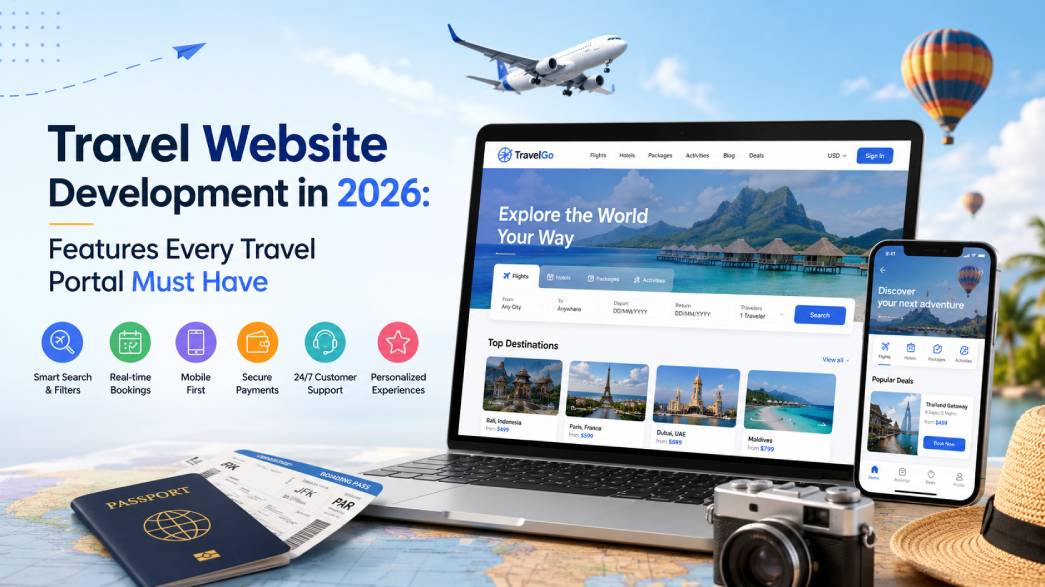
Travel Website Development in 2026: Features Every Travel Portal Must Have
Let's be real, most travelers today have already compared three websites, read a dozen reviews, and shortlisted their accommodation before finishing their morning coffee. If your portal slows them down at any point, they leave. No second chances. That's why travel website development has become one of the most important decisions a travel company can make right now.
This isn't about having something that looks polished in a demo. It's about building a platform that works for real users, on real devices, under real conditions.
Why Travel Website Development Matters in 2026
Online travel crossed the $1 trillion mark globally, and the booking power sits entirely with the traveler now. People don't call agencies to check availability. They expect to find, compare, and confirm everything themselves, fast.
Mobile-first behavior, same-session decision-making, and rising expectations around personalization mean travel businesses can't afford portals that simply exist. They need portals that genuinely perform.
Essential Features Every Travel Portal Must Have in 2026
Mobile-First Responsive Design
Over 70% of travel searches happen on phones, yet many portals still squeeze desktop layouts onto small screens and call it done. A genuine mobile-first build means designing for the thumb before the mouse, simple menus, touch-friendly buttons, and booking flows that don't require pinching or zooming.
Fast Loading Speed and Performance
Three seconds is roughly how long someone waits before clicking away. For pages loaded with destination images, search results, and map embeds, performance has to be engineered deliberately, image compression, lazy loading, CDN delivery, clean backend code. Users associate speed with reliability. A slow site signals a slow business.
User-Friendly Search and Filter Options
Search is where bookings are won or lost. Travelers need to filter by dates, price, destination type, and group size, and see results update without reloading the page. Autocomplete fields, smart calendar pickers, and instant filtering aren't extras. They're the baseline expectation now.
Real-Time Booking and Reservation System
The "submit an inquiry and we'll respond in 24 hours" approach is finished for most travel categories. Travelers want to see live availability, lock in a price, and get confirmation in the same session. A real-time booking engine removes that friction and cuts your team's admin load significantly.
Secure Payment Gateway Integration
No one hands over card details without trust first. Your checkout needs to signal security visually, SSL indicators, familiar payment logos, clean design, backed by a PCI-DSS-compliant gateway. Supporting cards, digital wallets, UPI, and instalment options also removes the "I'll do it later" hesitation that kills conversions.
AI-Powered Travel Recommendations
What was a premium feature three years ago is now expected. AI recommendation engines read browsing patterns and past bookings to surface packages that match what a user actually wants, not just what's on promotion. When it works well, it feels helpful. The quality is entirely in the implementation.
Interactive Maps and Destination Guides
A paragraph describing a resort location tells you little. A map showing the resort relative to the beach, airport, and nearest restaurant tells you everything. Interactive maps combined with real destination content, not recycled filler, keep users on your pages longer and give them confidence to book.
Multilingual and Multi-Currency Support
If you're targeting international travelers, showing prices in one currency and content in one language is leaving money on the table. Automatic currency detection, localized formatting, and translated content reduce doubt at the most critical moment in the booking process.
Customer Reviews and Testimonials
People spend real money on experiences they haven't had yet, in places they've never visited. Peer reviews carry more weight than anything your marketing team writes. Build verified review functionality directly into your tour and destination pages, it becomes one of your strongest conversion tools.
CRM and Third-Party API Integration
Solid travel agency website development always factors in the systems that need to connect. GDS platforms like Amadeus, Sabre, and Travelport alongside CRM tools and email platforms all need clean integration. When systems share data automatically, your team spends less time on manual updates and more time on customers.
Personalized User Dashboards
A returning customer should feel recognized the moment they log in. A dashboard showing upcoming trips, saved itineraries, loyalty points, and booking history builds a sense of relationship, and drives repeat bookings. Users who feel remembered don't go looking for alternatives.
Strong Security and Data Protection
Travel portals hold sensitive data, passport numbers, payment details, home addresses. SSL, two-factor authentication, regular audits, and GDPR compliance aren't checkbox items. One breach doesn't just hurt revenue. It can permanently destroy customer trust.
Benefits of Professional Travel Agency Website Development
When travel agency website development is handled by a team that knows the industry, results show up in the numbers:
- Bookings increase because the path from search to checkout is frictionless
- Support costs drop because self-service tools handle common questions
- Repeat visits grow because users feel recognized
- Brand credibility improves because a polished portal signals professionalism
- Team efficiency rises because integrations replace manual processes
How to Choose the Right Travel Website Development Company
Hiring a generalist agency that's never built a booking engine and learning that lesson on your budget is an expensive mistake. When evaluating any travel website development company, focus on:
- Real travel portfolio work: actual booking interfaces, not landing pages
- API and GDS familiarity: they should know Amadeus and Sabre by name
- Custom build capability: templates start you, they don't scale you
- Honest timelines: a quality portal takes months, not weeks
- Post-launch commitment: a dependable travel agency website developer stays engaged after handover
Ask to speak with past clients. Ask specifically how they handled booking engine failures. That's where real quality shows.
Looking for Expert Travel Website Developers?
If your current portal isn't converting the way it should, the right travel website developers can fix that and build something that scales with your business.
A specialized team brings custom portal architecture, live booking engine integration, SEO-structured responsive design, and genuine post-launch support. Professional travel website development services include performance monitoring, security updates, and feature rollouts as your business grows, not just a handover and goodbye.
If you want more bookings, stronger retention, and a digital presence that reflects what you actually offer, the technology to build it exists. You just need the right people to do it properly.
Frequently Asked Questions
1. How much does a travel portal cost to build?
Basic sites start at $5,000–$15,000. Custom platforms with booking engines and API integrations typically run $30,000–$100,000+ depending on scope.
2. How long does development take?
Simple sites: 4–8 weeks. Full-featured portals with booking systems and third-party APIs: 3–6 months is realistic.
3. Template or custom, which is right?
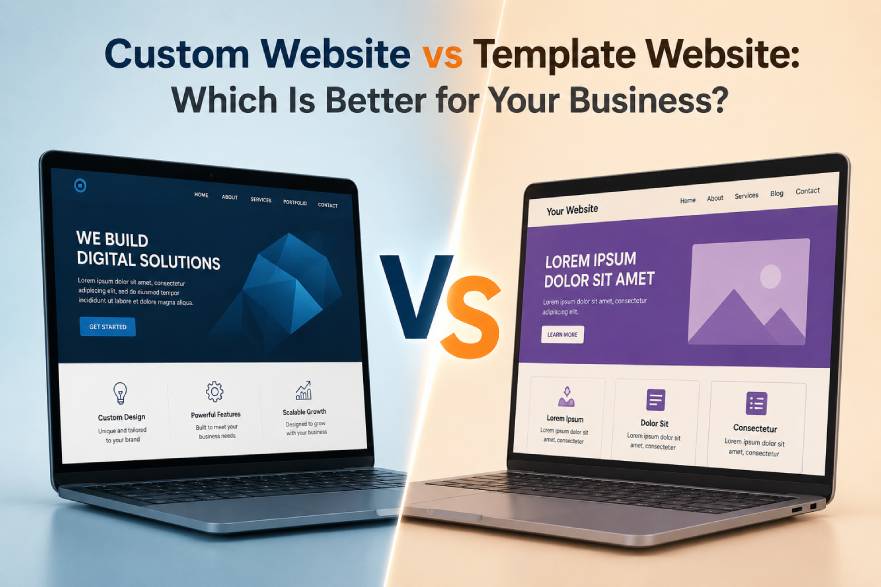
Templates work early on. Once you're competing seriously for bookings, custom development gives you the control and differentiation templates can't.
4. Which APIs are most commonly integrated?
Amadeus, Sabre, Travelport for flights; Booking.com or Expedia APIs for hotels; Stripe or Razorpay for payments; Google Maps for destinations.
5. How important is SEO for travel sites?
Very. Travel is one of the most competitive search categories. Fast load times, clean structure, and well-written content directly affect how much organic traffic you earn.
6. What does mobile-first mean in practice?
Design begins with the phone screen, navigation, forms, and booking flows optimized for touch before being adapted for desktop.
7. How do I keep a travel portal secure?
SSL, PCI-DSS-compliant payments, two-factor authentication for admin access, regular vulnerability scans, and compliance with applicable data protection laws.
8. Is a loyalty program worth adding?
Yes, particularly for businesses that want repeat customers. Points systems and member pricing are proven drivers of retention and lifetime value.
Conclusion
Travel businesses that grow in 2026 are the ones that took their digital experience seriously. Fast, secure, personalized, and easy to use, that's what today's traveler expects. That's what smart travel website development delivers. If your portal isn't hitting that standard yet, the gap between you and competitors who've already invested will keep widening. The good news: it's entirely fixable with the right team and a clear direction.





Need Assistance? Call us at +91 988 892 3050

Daksha Design is available 24/7 365 days a year. © 2026 All Rights Reserved
Post Comment
Fields marked with an asterisk (*) must be filled out before submitting.