
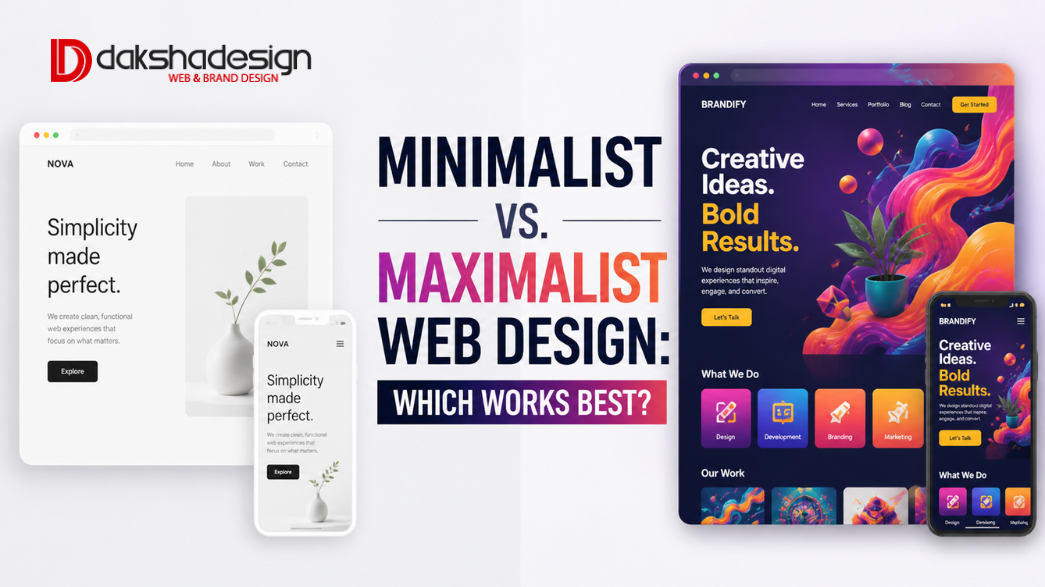
Minimalist vs. Maximalist Web Design: Which Works Best?
In today’s digital world, web design plays a major role in shaping how people see your brand online. Your website is often the first interaction a potential customer has with your business. Its design directly affects how users engage, how long they stay, and whether they convert into customers.
Two popular approaches dominate modern website design: minimalist and maximalist. Each has its own strengths and serves different purposes. Understanding both styles will help you choose the right direction for your next project.
What is Minimalist Web Design
Minimalist web design focuses on simplicity and clarity. It removes unnecessary elements and keeps only what truly matters. The goal is to guide users smoothly without distractions.
Key Features of Minimalist Design
Clean layout
Every element has a purpose and is placed thoughtfully.
Limited color palette
Soft or neutral colors are used to maintain a calm and professional look.
Ample white space
Spacing improves readability and makes content easier to understand.
Clear typography
Simple fonts with proper hierarchy help users scan information quickly.
Easy navigation
Menus are straightforward, helping users find what they need without confusion.
Why Minimalist Design Works
Minimalist websites create a polished and professional impression. They are easy to navigate and load faster, which improves user experience. This style is ideal for businesses that want to present information clearly and build trust with their audience.
What is Maximalist Web Design
Maximalist web design is the opposite approach. It embraces creativity, bold visuals, and rich content. This style is designed to grab attention and create a memorable experience.
Key Features of Maximalist Design
Bold color combinations
Bright and striking colors are used to stand out.
Layered visuals
Multiple elements such as images, textures, and graphics add depth.
Creative typography
Different font styles are used to highlight important content.
Interactive elements
Animations, hover effects, and dynamic features increase engagement.
Unconventional layouts
Designs often break traditional structures to create uniqueness.
Why Maximalist Design Works
Maximalist websites are expressive and full of personality. They are perfect for brands that want to stand out and leave a strong impression. This style works well for industries like fashion, entertainment, and creative services.
Minimalist vs Maximalist Web Design
Visual style
Minimalist design is simple and clean. Maximalist design is bold and detailed.
User focus
Minimalist design directs attention to key content. Maximalist design encourages exploration.
Website speed
Minimalist sites usually load faster due to fewer elements. Maximalist sites may be heavier because of visuals and animations.
Best use cases
Minimalist design suits corporate, technology, and ecommerce businesses. Maximalist design suits creative industries and brands that rely on visual impact.
User experience
Minimalist design is easy to navigate. Maximalist design can feel overwhelming if not handled carefully.
Brand perception
Minimalist design feels professional and refined. Maximalist design feels bold and expressive.
How to Choose the Right Style
Selecting the right design depends on your brand, audience, and goals.
Understand your brand personality
If your brand is modern and professional, minimalist design is a strong choice. If your brand is creative and energetic, maximalist design may suit better.
Know your audience
Users who prefer simplicity will appreciate minimalist design. Younger or more creative audiences may enjoy bold and interactive designs.
Define your website goal
If your goal is to present products or services clearly, go with minimalism. If your goal is to create an engaging experience, maximalism can be effective.
Consider your resources
Maximalist websites often require more design effort, updates, and technical expertise. Minimalist websites are easier to manage and optimize.
Hybrid Approach: A Balanced Solution
Many modern websites combine both styles to achieve better results. This hybrid approach blends simplicity with creativity.
You can use a clean layout and structured design for clarity while adding bold visuals or interactive elements to make the website engaging. This balance creates a design that looks modern and performs well.
SEO Benefits of Good Web Design
Web design is not just about appearance. It also affects search engine performance.
Minimalist design benefits
Faster loading speed, better mobile experience, and simple navigation improve rankings.
Maximalist design benefits
Engaging visuals and interactive features increase user time on the site, which can reduce bounce rates.
Hybrid design benefits
A balanced design offers both speed and engagement, leading to stronger overall SEO performance.
Pro tip
Always optimize images, reduce unnecessary code, and ensure your website is mobile friendly to improve both user experience and search rankings.
Conclusion
Choosing between minimalist and maximalist web design is not about which one is better. It is about what works best for your business. Minimalist design offers clarity, simplicity, and professionalism. Maximalist design delivers creativity, energy, and strong visual impact.
If you want the best results, consider a balanced approach that combines both styles. A well designed website should reflect your brand identity, engage users, and support your business goals.
No matter which direction you choose, working with skilled designers who understand user experience and SEO will help you create a website that stands out and performs effectively in the years ahead.




Need Assistance? Call us at +91 988 892 3050

Daksha Design is available 24/7 365 days a year. © 2026 All Rights Reserved
Post Comment
Fields marked with an asterisk (*) must be filled out before submitting.